Article content
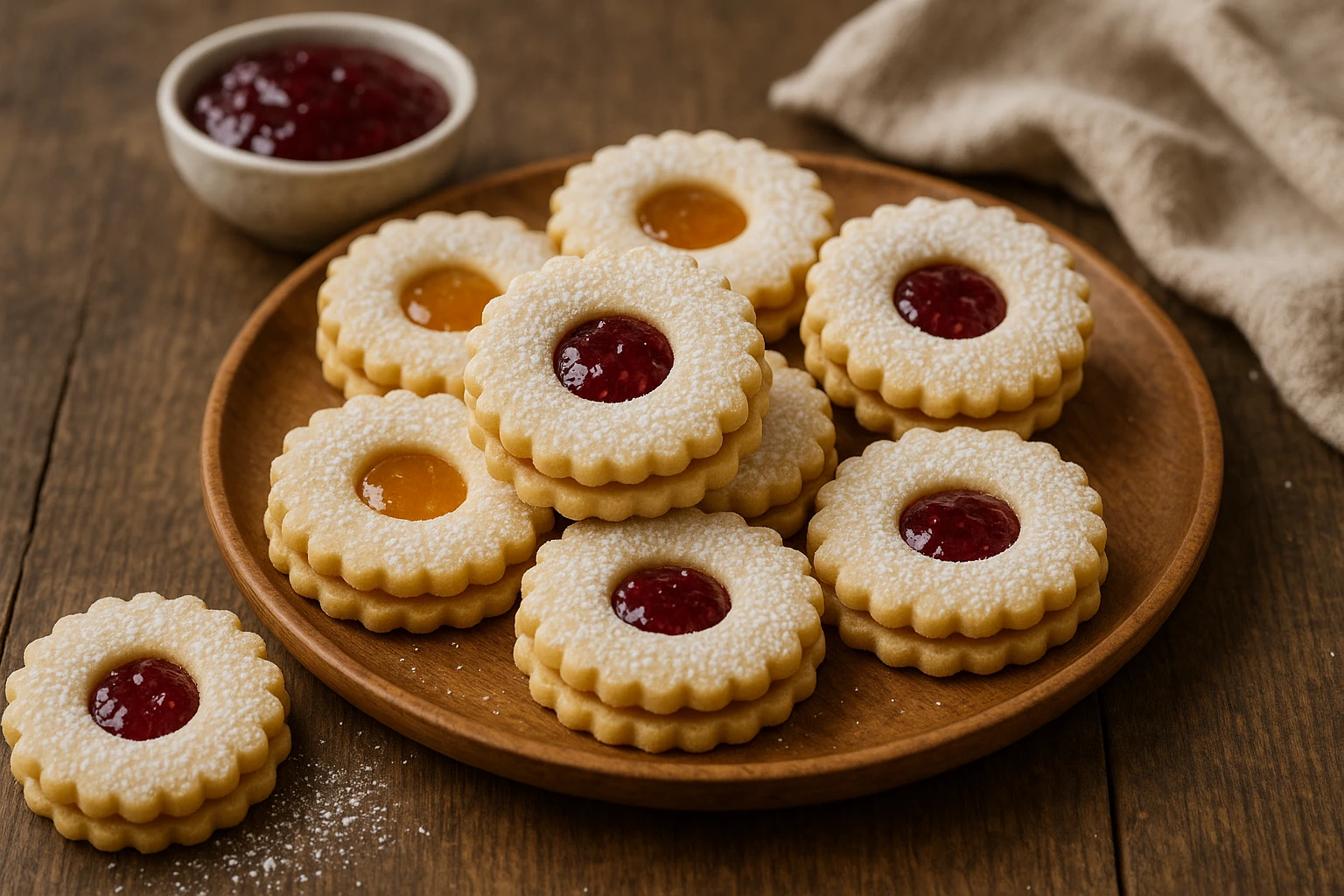
Linzer cookies are among the most classic things you’ll find on the table at Christmas. Delicate, buttery, scented with lemon zest and vanilla, with a layer of jam that beautifully merges with the sweet dough — that’s the taste of childhood we want to pass on.
And yet many people find that Linzer cookies crumble after baking, are hard, or the dough is hard to work with at all. But you only need to know one essential rule that will make your Linzer always succeed:
The butter must be cold.
Do not use softened or melted!
This simple rule ensures the dough stays tender, won’t stick, and the cookies will hold their shape nicely after baking.
Why cold butter is the key to success
- cold butter breaks down evenly into the dough
- no excess gluten forms → the cookies remain delicate and crumbly
- the dough sticks less to your fingers and the rolling pin
- after baking it doesn’t fall apart and has a perfect structure
If the butter is allowed to soften, the dough becomes greasy, sticky and crumbles after baking. That’s why professional pastry chefs even grate the butter on a coarse grater.
When the most common mistake occurs
Many people work the dough in their hands for a long time, which warms it and creates a hard and dense result. The ideal is to combine the dough quickly and gently:
- only until the ingredients come together
- do not overwork by kneading
- after combining, rest immediately in the cold
Linzer cookies have a rich history
The first mentions of Linzer dough come from Austria, from the city of Linz, as early as the 17th century. Since then it has found its way into Czech kitchens and become a symbol of Christmas.
Every family has its own traditional variant — with nuts, with cocoa or scented with lemon. But the base remains the same.
Universal recipe for Linzer dough (always succeeds)
Ingredients:
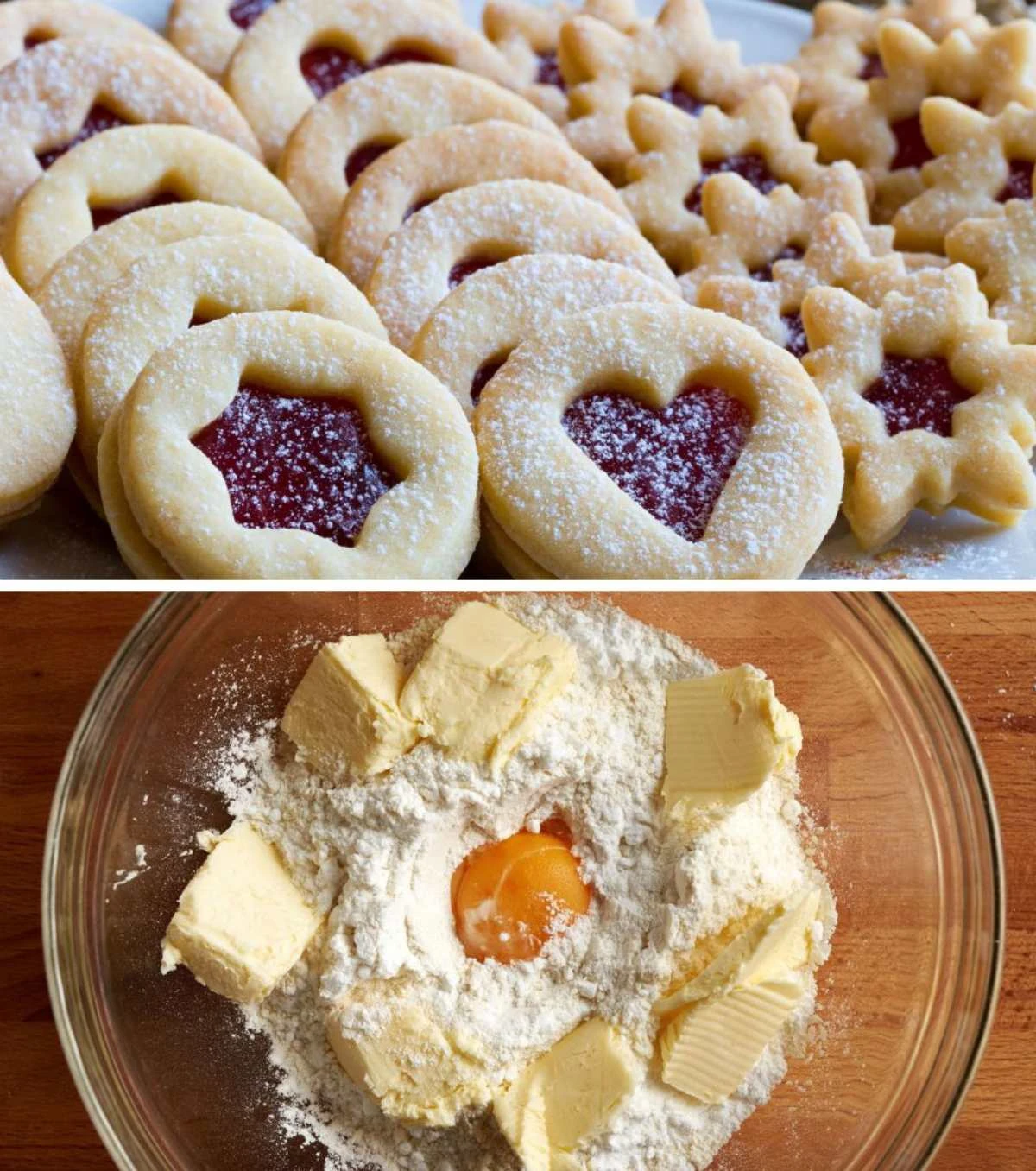
- 300 g plain flour
- 200 g cold butter
- 100 g powdered sugar
- 1 teaspoon vanilla sugar
- a pinch of lemon zest
- 1 egg yolk
Method:
- Sift the flour and powdered sugar into a bowl — the dough will be finer.
- Add the vanilla, lemon zest and the egg yolk.
- Add the cold butter cut into small cubes (or grated).
- Work quickly — only bring together into a smooth ball.
- Wrap in plastic wrap and let rest in the fridge for at least 2 hours.
After resting the dough is ready for cutting out, filling, decorating and baking.
Recommended baking temperature: 170–180 °C
Baking time: 6–9 minutes depending on size and thickness
Tips for perfect Linzer cookies
- roll out the dough in stages; small portions heat up less
- if the dough sticks, briefly return it to the cold
- let the baked cookies rest until the next day
- fill with good-quality jam (red currant, sour cherry, apricot)
- store finished cookies in a cool place in a closed container
Why Linzer cookies deserve a place in your Christmas ritual
It’s a pastry that brings families together — children cut out shapes, parents bake and grandmothers happily pass on their secret tips. And when that beautiful buttery scent starts to spread through the kitchen, we all immediately know Christmas is near.
If you follow this simple trick with cold butter, your Linzer will be exactly as it should be — crumbly, fragrant and melting on the tongue.