Article content
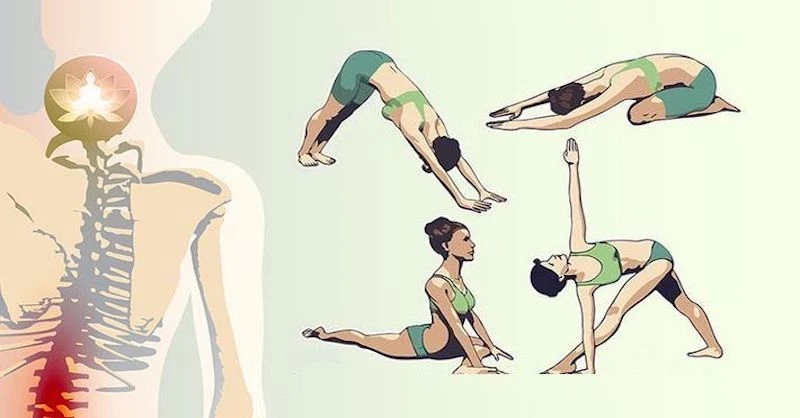
We have already talked about the importance of mobility and flexibility of the whole body. Today, however, we will focus on the flexibility of your lower back and its impact on health.
Regular, gentle yoga practice helps improve core muscle strength, increases flexibility and mobility. These are key factors for reducing back pain and preventing unpleasant spinal problems.
Why flexibility of the lower back is so important
Nowadays most of us spend hours sitting. Prolonged sitting inevitably leads to stiff lower back muscles and limited mobility.
Dangers of a stiff lower back
1. Muscle imbalance
During long periods of sitting, the muscles at the front of the hips (hip flexors) shorten. At the same time the muscles on the back side of the lower back and the glutes become overly stretched. These changes harm and weaken the muscles.
2. Back pain
Because of shortened hip flexors and weakened extensors, there is an unnatural forward tilt of the pelvis. This then overloads the lower back and causes pain in the sacral area.
3. Poor posture and balance
Weak hip flexors disrupt pelvic stability and thereby affect your balance and posture.
Yoga as relief for an aching lower back
Daily short stretching of the lower back helps compensate for long periods of sitting. Regular yoga practice improves mobility, strengthens muscles and gives the body energy.
Before starting any exercise, always consult your doctor or physiotherapist. If you feel pain, stop exercising immediately.
8 yoga poses to release the lower back and sacrum
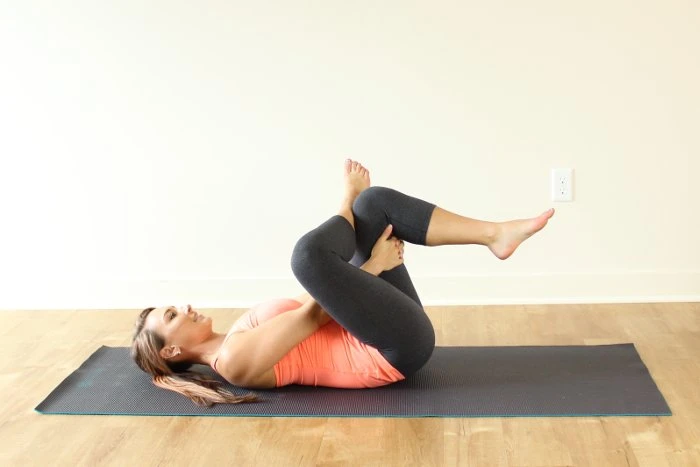
1. Thread-the-needle pose
Lie on your back, knees bent, feet on the mat.
Cross the right ankle over the left knee. Using your hands, draw the left knee toward the chest.
Hold for at least 30 seconds on each side.
2. Happy Baby pose
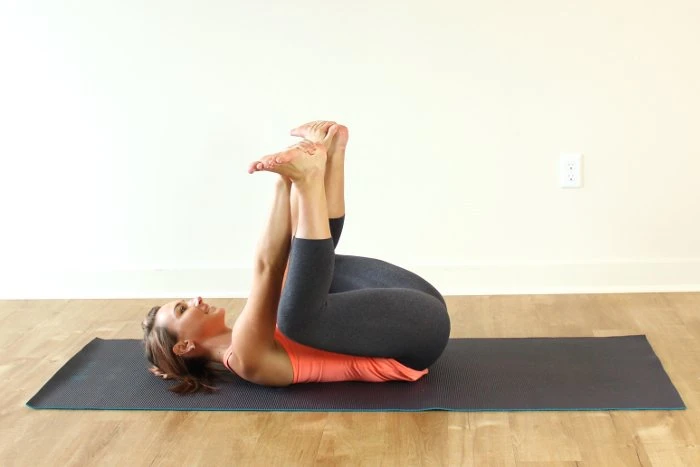
Lie on your back and draw your knees to your chest. Place your hands on the inner sides of your feet and open your knees out to the sides.
Press your feet into your hands and create a gentle resistance.
Breathe deeply and hold for 30 seconds.
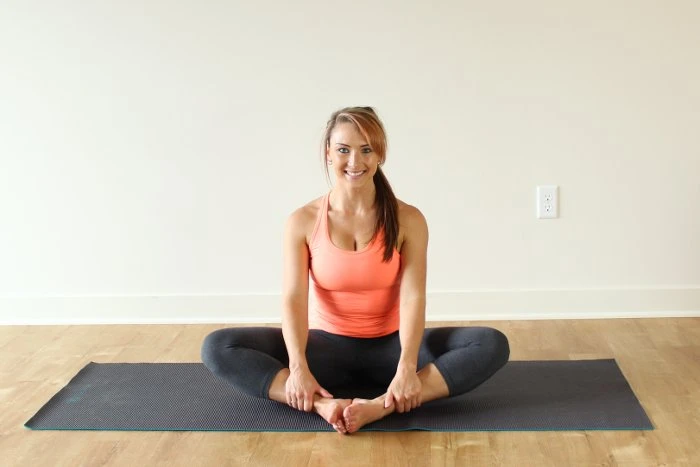
3. Butterfly
Sit on the mat, bring the soles of your feet together and let your knees fall freely to the sides.
You can lean forward slightly for a more intense stretch.
Hold for at least 30 seconds.
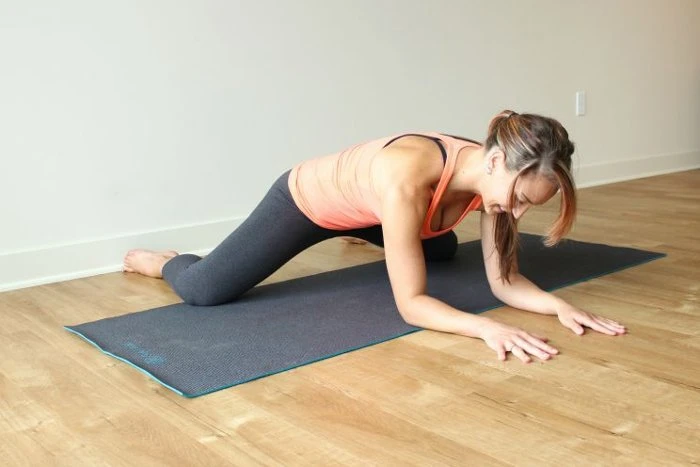
4. Frog
Come onto all fours and gradually widen your knees to the sides until you feel a pleasant stretch in the inner thighs.
You can come down onto your forearms for a deeper position.
Hold the position for at least 30 seconds.
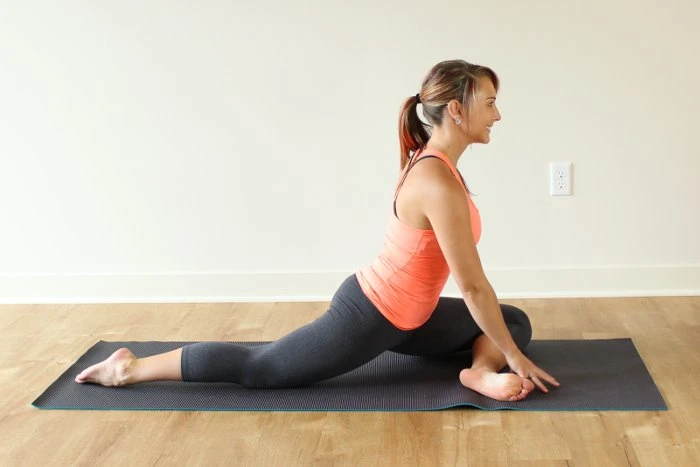
5. Half pigeon
From a lunge, move the front foot to the side and place the shin parallel to the front edge of the mat.
Support yourself on your hands or lie down on your forearms.
Stay in the position for 30 seconds and switch sides.
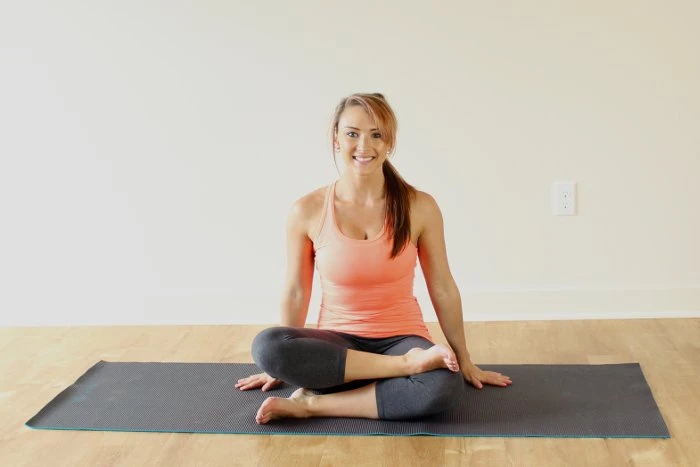
6. Double pigeon
Sit down, bend your left leg and place the ankle on the right knee. The shins should be stacked on top of each other.
If you feel tension, remain in this position and breathe through it gradually.
Hold for 30 seconds on each side.
7. King Pigeon pose
An advanced variation of the half pigeon. It stretches the deep muscles of the glutes and lower back.
Draw your heel toward your pelvis and arch back with your arms stretched upward.
Hold for 30 seconds.
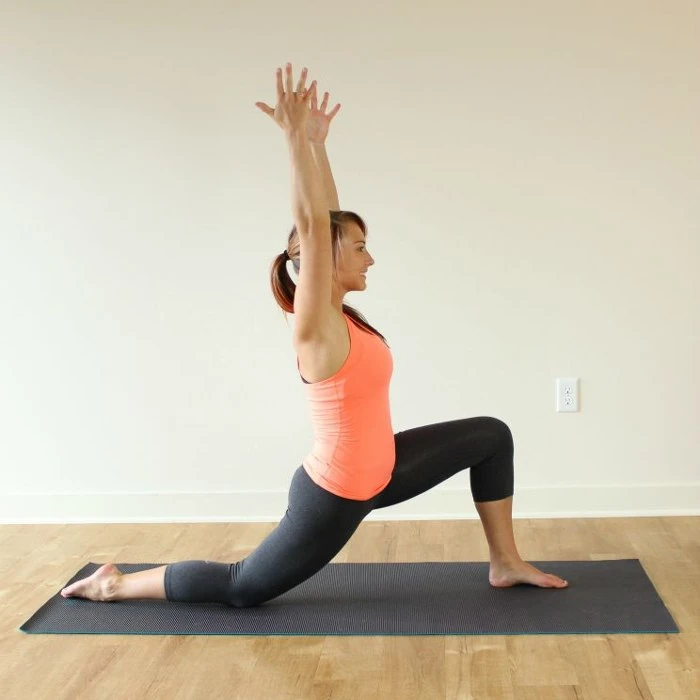
8. Wide-knee Child’s Pose
Sit back on your heels, spread your knees to the width of the mat, rest your torso on the mat and reach your arms forward.
This pose will release the lower back, pelvis and the lower part of the spine.
Breathe deeply and hold for 1 minute.
Conclusion
If you learn to devote a few minutes each day to gentle stretching, your lower back and sacral area will thank you. Thanks to these exercises you will feel relief, improved mobility and also more energy for daily activities.