Article content
At first glance a simple question, but the answer will surprise most people. A short viral riddle is spreading online that will test how carefully we read and how easily a simple phrasing can trick us.
The puzzle
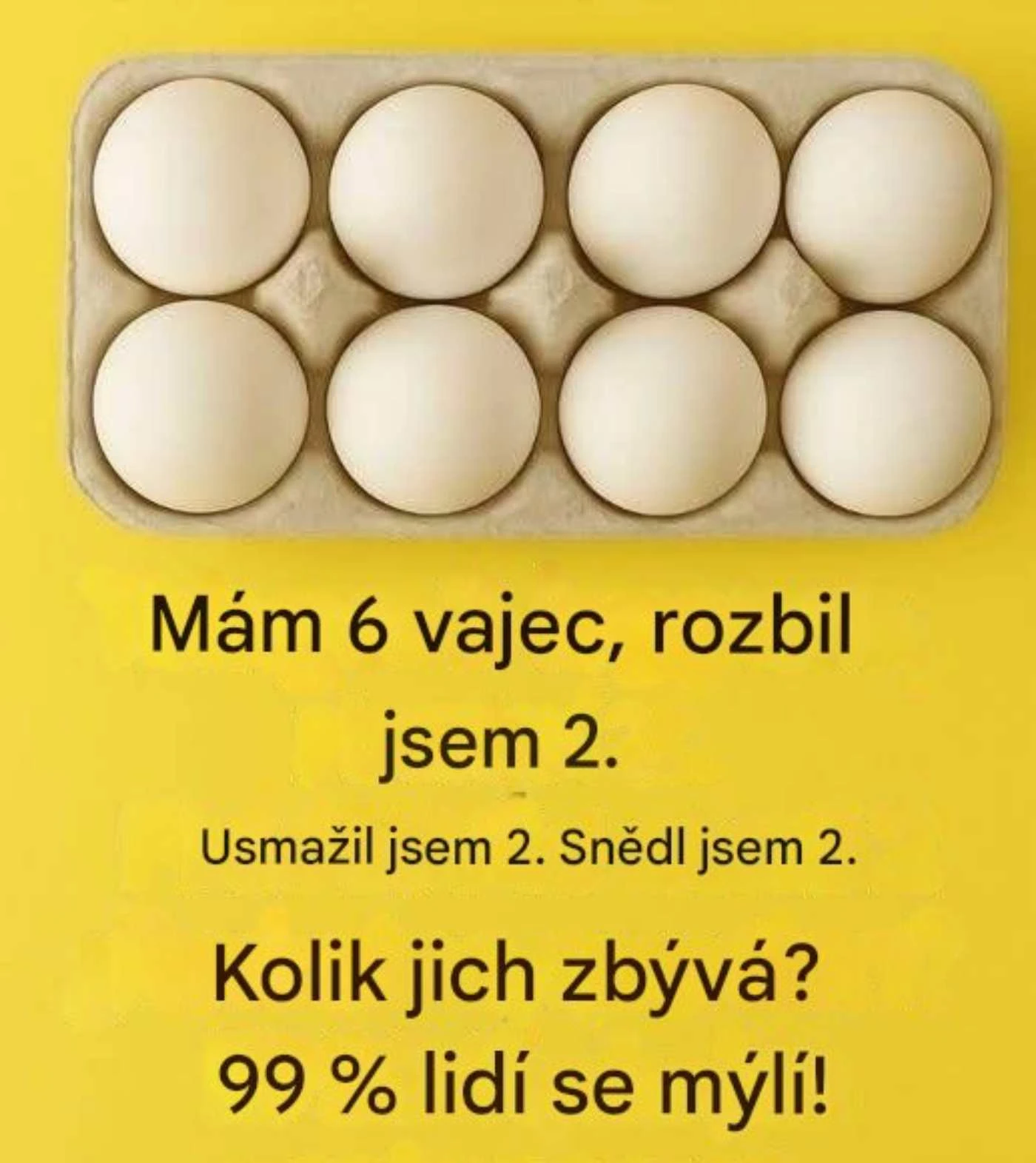
„I have 6 eggs. I broke 2. I fried 2. I ate 2. How many eggs do I have left?“
Why most people answer incorrectly
Most people calculate: 6 − 2 − 2 − 2 = 0. But this logic assumes that each action refers to a different set of eggs, which is not true.
Logical analysis
1. „I have 6 eggs.“ → Initial state: 6 eggs.
2. „I broke 2.“ → Two eggs are broken, but you still have them.
3. „I fried 2.“ → They are the same eggs that were broken.
4. „I ate 2.“ → They are the same eggs that were fried and broken.
Correct answer
You used only two eggs for breaking, frying and eating. You have 4 eggs left that you didn’t use at all.
Common mistake
People assume that each action means new eggs: 2 broken + 2 fried + 2 eaten = 6. In reality, it’s the same two eggs in three steps.
What this teaches us
It’s not just about math, but about careful reading. The brain tends to fill in guesses and assumptions that aren’t present in the text. Therefore it’s important to read carefully and not rush to a conclusion.