Article content
Hydrangeas (Hydrangea) are among the most popular ornamental shrubs in Czech gardens. Their abundant flowers and glossy green leaves can transform any corner of the garden into a colorful oasis. However, for hydrangeas to look truly spectacular, they need the right care. In this article we will reveal proven florist tips on how to provide hydrangeas with ideal conditions for growth, flowering, and healthy leaves.
How to properly care for hydrangeas for abundant flowering
- Lighting: Hydrangeas grow best in partial shade, where they have enough light but are protected from the strong midday sun. Some varieties can tolerate full sun if they have enough moisture.
- Watering: These shrubs love regular watering. However, make sure the soil is not waterlogged. Ideally the soil should be moist but well-drained to prevent root rot.
- Fertilizing: Use fertilizers with a higher phosphorus content, which promote flowering. Avoid fertilizers high in nitrogen – it causes excessive leaf growth but inhibits flower formation.
How to support healthy and strong hydrangea leaves
Healthy leaves are not just an aesthetic feature – they indicate the vitality of the whole plant. If you want your hydrangea to have strong, glossy leaves without signs of damage, follow the recommendations below:
- Proper watering: Hydrangea leaves quickly react to lack of water by wilting. Water regularly and generously, especially on hot summer days. It’s best to water at the roots, not over the leaves.
- Protection against pests: Regularly check the undersides of the leaves. If you notice aphids, mites, or other insects, use natural sprays (e.g. soapy water or neem oil).
- Regular pruning: Remove spent flowers and damaged leaves. This encourages the growth of new shoots and the overall health of the shrub.
Influencing the color of hydrangea flowers
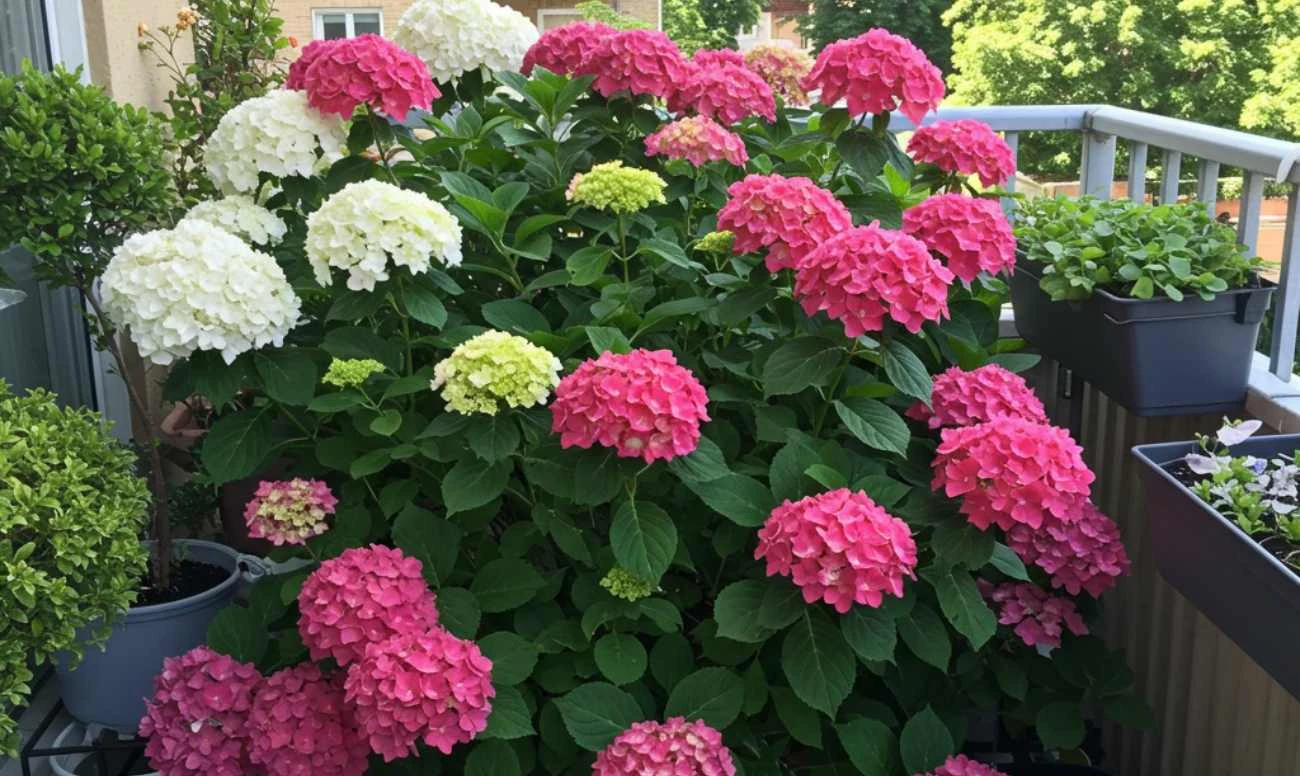
One of the unique features of hydrangeas is their ability to change flower color depending on soil pH:
- Blue flowers: you get in acidic soil (pH 5,5 and lower). Add aluminum sulfate or peat.
- Pink flowers: form in neutral to slightly alkaline soil (pH 6,5+). Adding lime or dolomitic limestone helps.
The color of the flowers is therefore not only a matter of genetics, but also of your gardening alchemy.
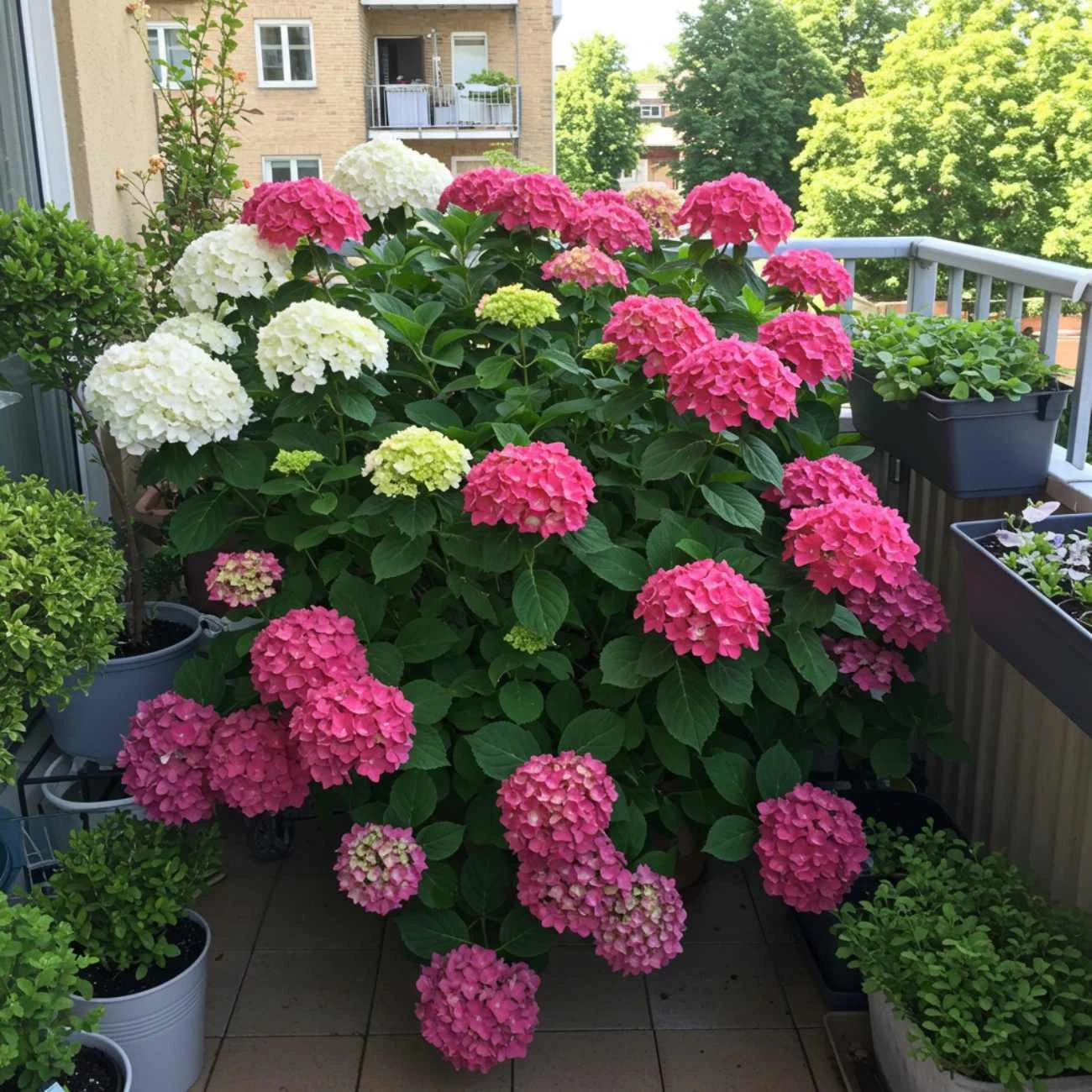
Hydrangeas in garden design
Hydrangeas are ideal for hedges, as specimen shrubs, and in flower beds. They suit both romantic and modern gardens. They contrast beautifully with ferns, hostas, or ornamental grasses. Thanks to their long flowering period, they are a decoration from early summer until autumn.
Summary and recommendations
- Choose a partially shaded spot with well-drained soil.
- Water regularly, but without waterlogging.
- Use fertilizers higher in phosphorus.
- Monitor the flower color and adjust soil pH as needed.
- Regularly inspect, trim, and protect your hydrangeas from pests.
Conclusion
Hydrangeas are beautiful but require care and attention. If you give them the right conditions, they will reward you with a profusion of flowers and healthy leaves. Try our tips, get inspired, and grow your own queens of the garden.