Article content
Correct blood pressure values are the key to a healthy heart and prevention of serious diseases. Many people, however, do not realize that ideal values can change with increasing age. Did you know that after forty you need to pay more attention to your blood pressure than before?
High blood pressure: the silent killer that doesn’t hurt
High blood pressure doesn’t hurt, but it quietly damages. According to experts, untreated hypertension can lead to a heart attack, stroke or kidney failure. Yet many people underestimate symptoms such as dizziness, headaches or fatigue. It takes little – have your blood pressure measured regularly and adjust your lifestyle.
What is normal blood pressure and what are its limits?
The ideal pressure for a healthy adult is considered to be 120/80 mmHg. However, if values above 140/90 mmHg are measured repeatedly, action is needed – ideally under a doctor’s supervision. A critical signal is a value of 180/110 mmHg or more, at which a person should seek immediate help.
How does blood pressure change with age?
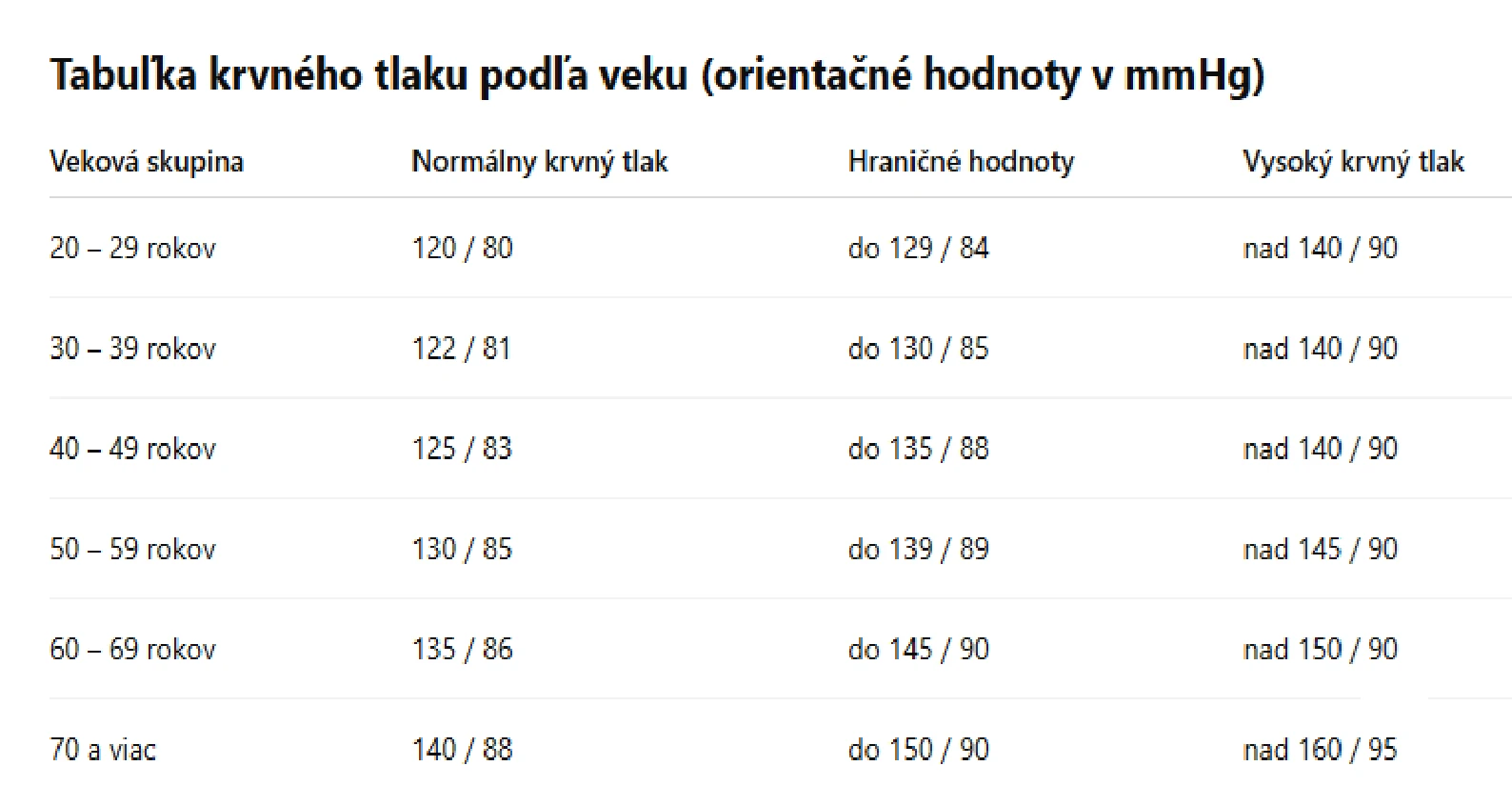
Pressure naturally increases with age. Vessel walls lose elasticity and the heart faces greater strain. Fluctuations are also caused by stress, fatigue, lack of exercise or poor eating habits. That is why it is important to monitor pressure according to age groups:
- After age 30: First fluctuations – especially with stress and lack of sleep.
- After age 40: Risk of hypertension, pressure around 135/85 mmHg.
- After age 50: Common values 140/90 mmHg.
- In your 60s and 70s: Pressure should not exceed 150/90 mmHg.
Changes in blood pressure are natural, but they should not be ignored. Even small lifestyle changes can make a big difference.
Prevention is fundamental: what you can do right away
Want to maintain healthy blood pressure? Here are four practical tips:
- Move every day – walking, swimming or light exercise.
- Limit salt and fats – avoid industrially processed foods.
- Manage stress – breathing exercises or relaxation help.
- Don’t smoke and limit alcohol – even small amounts can raise blood pressure.
Why measure blood pressure regularly?
Regular blood pressure measurement should be a matter of course – especially after forty. Ideally at least once a month. If you have a blood pressure monitor at home, measure your pressure at rest, after five minutes of rest, always at the same time of day. Regularity helps uncover hidden fluctuations.
Conclusion
Blood pressure is an indicator of our overall health. Don’t wait for symptoms that may come too late. Keep your values under control, maintain a healthy lifestyle and act in time. This way you will keep a healthy heart and blood vessels – and quality of life even at an older age.