Article content
Plectranthus (Plectranthus amboinicus) is an aromatic plant from the Lamiaceae family that is finding its place in Czech households more and more often. It is valued not only for its low maintenance requirements, but mainly for its wide range of effects – from treating colds to use as a natural insect repellent. In this article you will learn how to recognize Plectranthus, how to grow it and how it can help you.
Origin and characteristics of Plectranthus
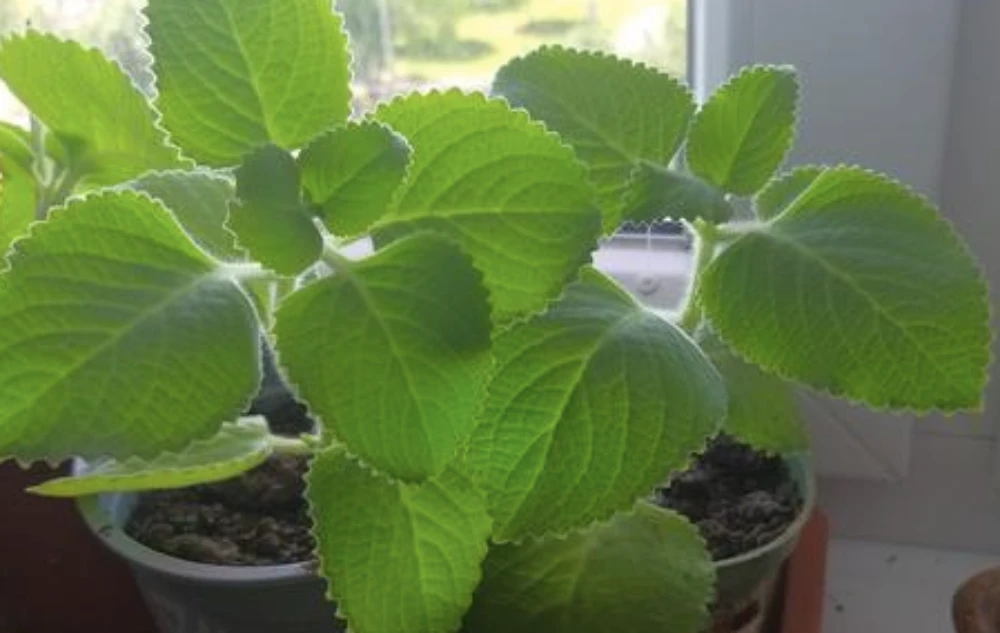
Plectranthus originates from regions of eastern Africa and is also found in the tropics and subtropics. In different parts of the world it is also known as molice, Cuban oregano, Greek eucalyptus or Mexican thyme. Its typical features are:
- distinct, fleshy, oval leaves with a serrated margin that give off an intense scent when crushed,
- a bushy growth reaching about 1 meter in height,
- small white to pink flowers that bloom at the end of summer.
Health effects and possible uses
1. For colds and a runny nose
Plectranthus is widely used as a home remedy for respiratory problems. Its strong aroma clears the nose and relieves a runny nose – simply crush a leaf and inhale.
💡 Tip: make tea from fresh leaves – it helps loosen the airways and strengthens the immune system.
2. Natural repellent
Due to its distinctive scent it repels mosquitoes, flies and moths. You can:
- place it on a windowsill,
- put dried leaves in wardrobes against moths,
- or make a natural repellent at home (see below).
3. In the kitchen
Plectranthus leaves can be eaten raw or cooked. They are suitable as a spice for soups, sauces or meat. It has a flavor similar to oregano with a eucalyptus note.
4. Digestion and healing
Plectranthus supports digestion and relieves stomach complaints. It also has anti-inflammatory and healing properties – it can be used on minor wounds or insect bites.
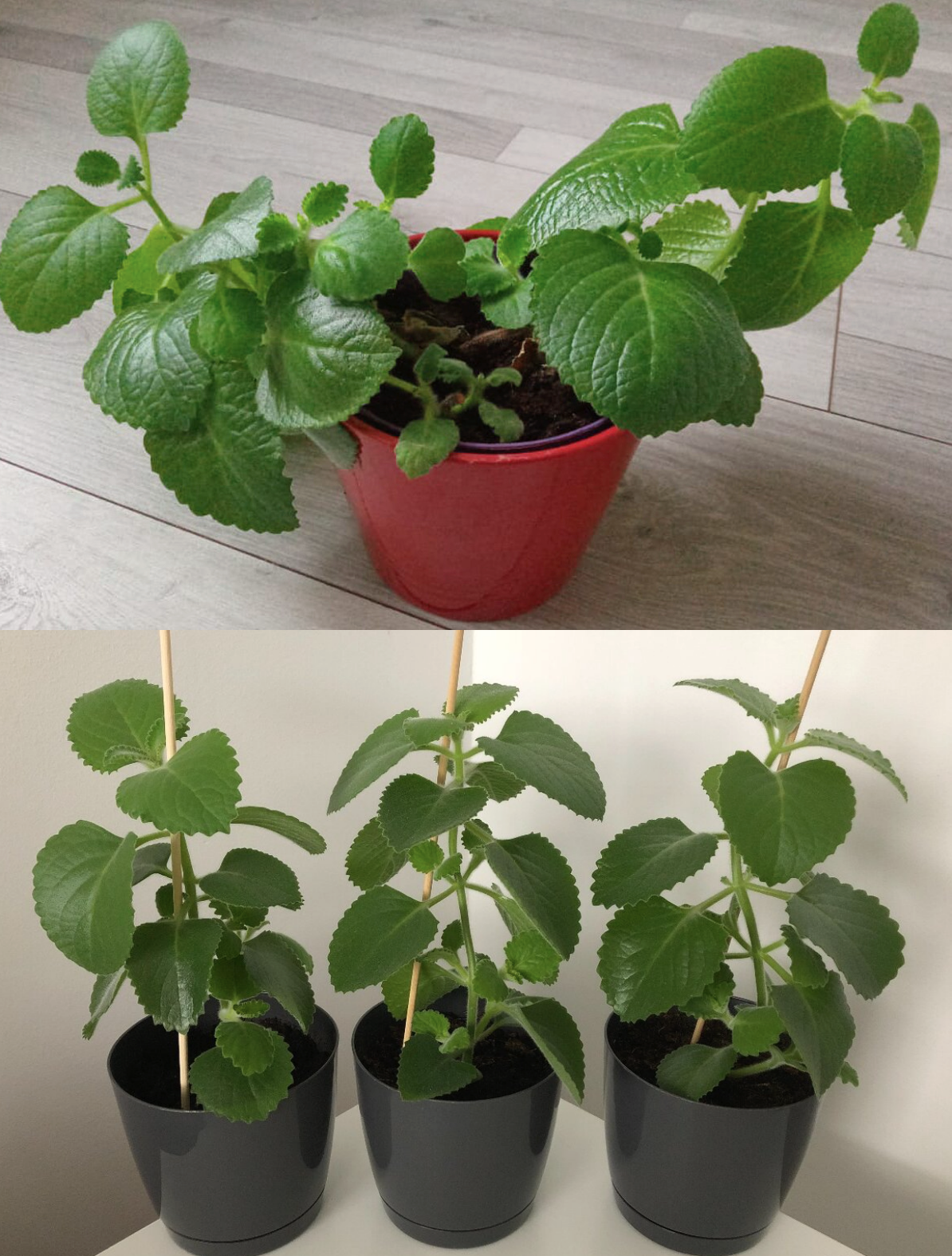
Growing Plectranthus indoors and in the garden
Ideal conditions:
- a bright spot without direct sunlight (e.g. partial shade),
- common substrate mixed with sand for better drainage,
- temperature ideally 22–28 °C, but it can tolerate a range of 10–36 °C,
- water moderately – it tolerates drought better than waterlogging.
💡 Tip: During winter reduce watering and keep the plant in a cooler room (around 15 °C), or leave it at normal room temperature.
Repotting and propagation
Plectranthus is very easy to propagate. Simply:
- cut a stem with several leaves,
- place it in water,
- after 2–3 weeks it will root and you can plant it in a pot.
How to make a homemade repellent from Plectranthus
You need:
- 1 cup of chopped Plectranthus leaves,
- 0.5 liters of water.
Procedure:
- Bring to a boil, then remove from heat and let steep until the next day.
- Strain through a sieve into a spray bottle.
- Use as a natural repellent on the skin or around the home.
Conclusion: Why grow Plectranthus?
Plectranthus is a practical and attractive herb that you can use for health and in the kitchen. It does not require any special conditions, propagates easily and will please you not only with its leaves but also with its medicinal properties. If you are looking for a plant that will help with colds, digestion, insects and at the same time decorate your interior, Plectranthus is a clear choice.