Article content
Leaves of the common walnut (Juglans regia) are not just a symbol of autumn. Our ancestors knew well that they hide immense healing power. A tincture from these leaves has been used for centuries as a natural remedy for inflammations, rheumatism, joint pain, digestive problems and skin issues.
The walnut is rightly considered a tree of health and longevity, because its leaves contain valuable substances that have healing effects on the whole organism.
Why walnut leaves are so exceptional
Walnut leaves contain tannins, juglone, flavonoids, essential oils, vitamin C and minerals, which act:
- antibacterially
- anti-inflammatory
- detoxifying
- healing for the skin
The tincture thus becomes a universal remedy for many health problems – from inflammations through eczema to rheumatic pain.
How to prepare a walnut leaf tincture
Ingredients:
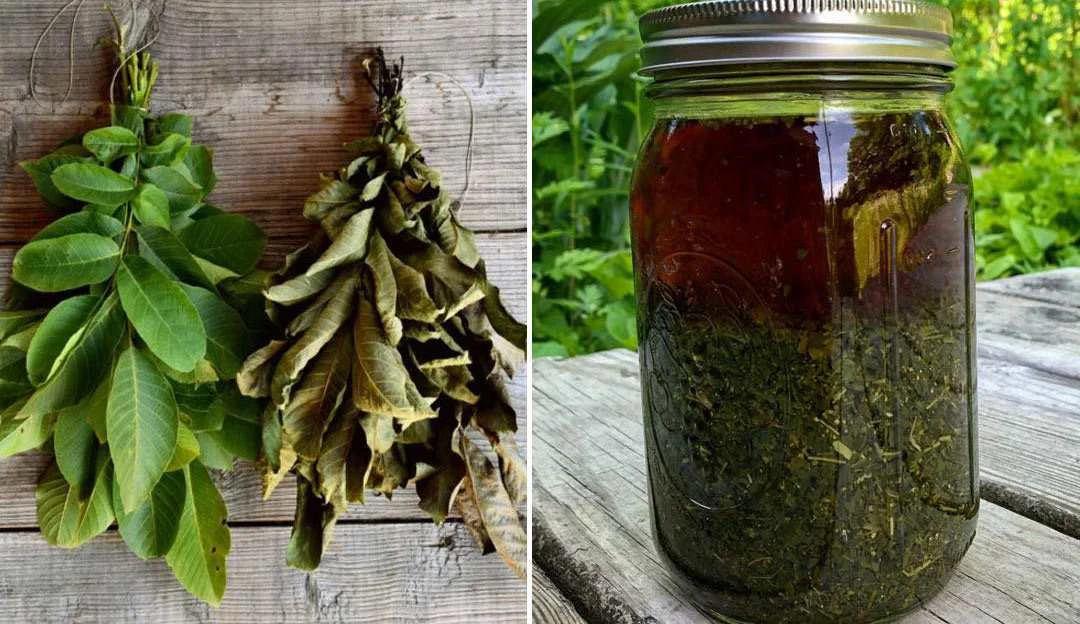
- 1 handful of dried walnut leaves
- quality alcohol (e.g. vodka or spirit, at least 40%)
- a jar with a lid
Procedure:
- Let the collected walnut leaves dry in a shaded, dry and airy place.
- Chop or crush the dried leaves into small pieces.
- Fill the jar with the leaves to about half.
- Pour alcohol so that the leaves are completely submerged and the liquid exceeds them by about 2–3 cm.
- Seal with the lid and let macerate for 4–6 weeks in a cool, dark place.
- After the time has passed, strain and pour the tincture into a dark glass bottle.
This way you obtain a strong extract that will last several months and preserves all the active substances of the leaves.
How to use the tincture
Walnut leaf tincture has wide use – internal and external.
External use:
- For sore throat: a few drops in warm water and use as a gargle.
- For joints and muscles: gently massage into painful areas.
- For the skin: for eczema, itching, acne or fungal conditions.
Internal use:
- For digestion: a few drops of tincture in a glass of water before or after a meal.
- For detoxification: 10–15 drops daily for two weeks, then one week break.
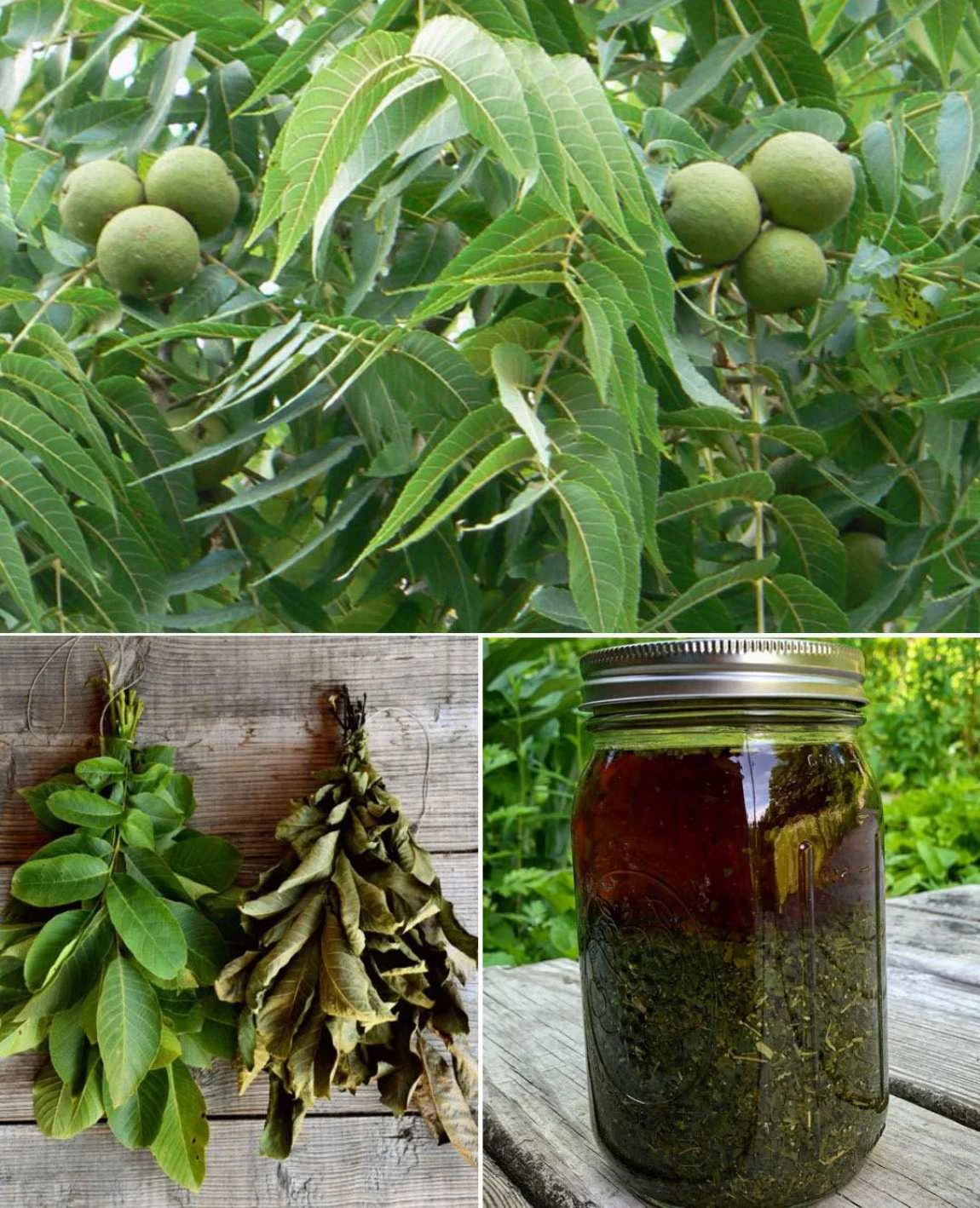
What the tincture can help with
- joint inflammations, rheumatism
- eczema, acne, fungi, psoriasis
- arterial pains, blood pressure problems
- gum and throat inflammations
- immune support and body cleansing
- improvement of digestion and liver function
Walnut leaves, thanks to the content of juglone, act antiseptically, constrict tissues and soothe inflammations. They are therefore also suitable as a supplement in the treatment of skin infections or parasitic problems.
Warning
Walnut leaf tincture is a traditional folk medicine remedy. Do not exceed the recommended dosage and do not use it long-term without breaks. If you have a serious illness or take medications, consult your doctor or pharmacist. The tincture is not suitable for pregnant women and small children.
Conclusion
Walnut leaves are not just a beautiful decoration of the tree – they are a natural pharmacy that we literally have within reach. A tincture from them can help with a wide range of health problems, from inflammations to joint pain. Try this old wives’ remedy that our ancestors successfully used for generations.
If you know your own way to use walnut leaves, share it – our grandmothers’ experiences are priceless.