Article content
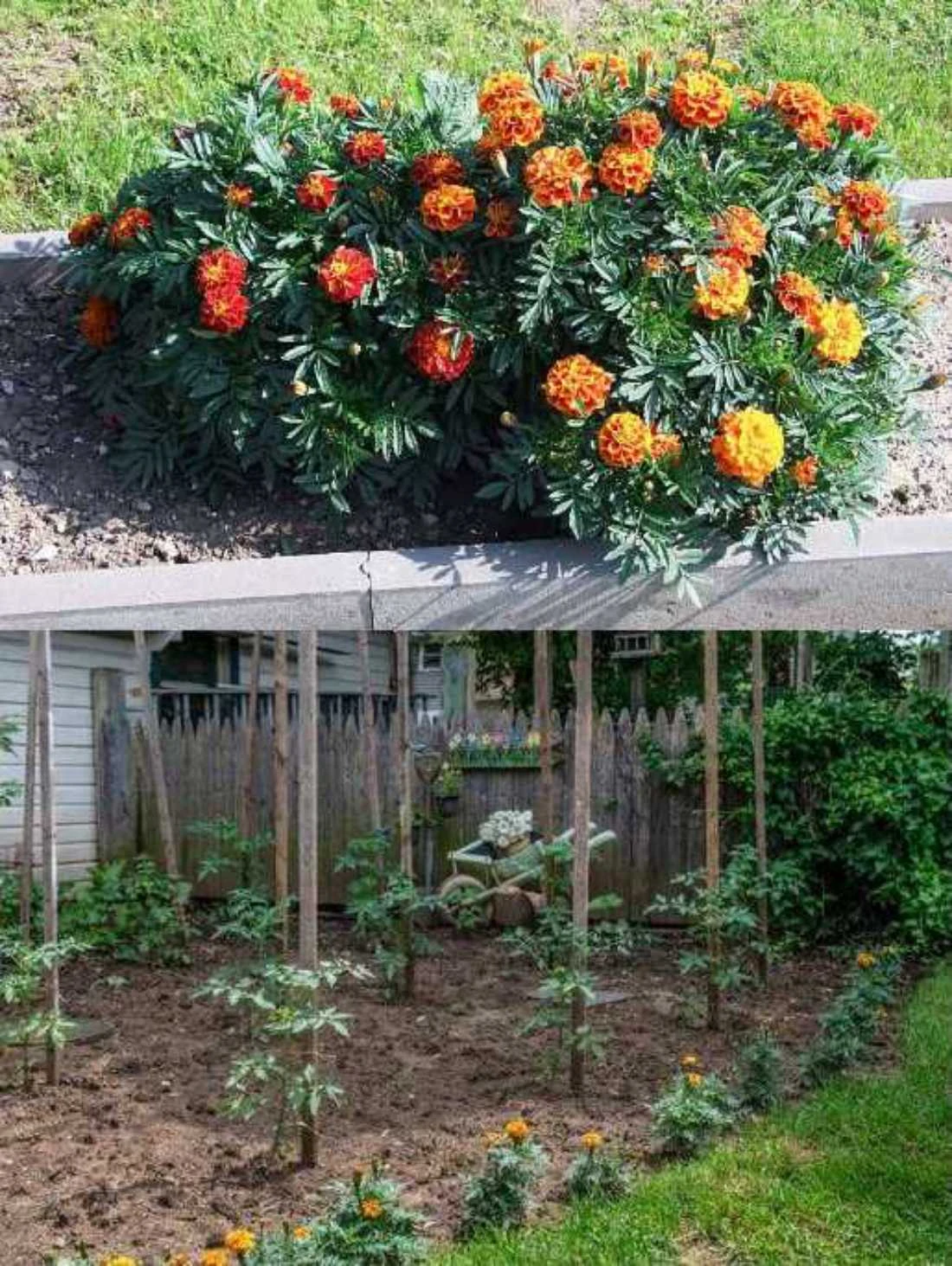
Tomatoes are a favorite crop among gardeners – they grow beautifully, taste great and are incredibly versatile. Yet they are often threatened by attacks from insect pests, slugs and soil-borne diseases. Fortunately nature offers a simple and effective solution – marigolds. These flowers are not only beautiful to look at, but literally have protective abilities.
Companion planting or symbiosis in practice
In nature, so-called symbiotic relationships often occur. Just as little fish clean the teeth of sharks or sea turtles are visited by fish that help with their hygiene, plants also help each other. Some enrich the soil with nitrogen, others aerate it with their deep roots. Marigolds are then a great friend specifically for tomatoes.
1. Marigolds attract bees and beneficial insects
Marigolds are a magnet for pollinators such as bees, butterflies and ladybugs, which help improve yields. They also attract beneficial insects that feed on pests, such as aphids or caterpillars. Thanks to them your tomatoes will be healthier and more productive.
2. Marigolds as bait for slugs and snails
Slugs and snails are among the sworn enemies of tomatoes. They often remain undetected until you find soft holes and slimy trails on the fruit. However, marigolds taste even better to these pests than tomatoes, and thus serve as a “trap crop”. In the morning just walk through the garden and remove the unwanted visitors.
3. Marigolds repel mammals and snakes
Their intense scent is not only charming to humans. On the contrary it repels many animal pests – from rabbits, through cats, to deer. And although snakes don’t eat tomatoes, marigolds can deter them from visiting the bed thanks to their aroma.
4. Marigolds protect the soil from nematodes
Tomatoes and their relatives – peppers and eggplants – can be attacked by root-knot nematodes. These microscopic pests can seriously damage plants. Marigolds contain substances that kill nematodes before they multiply. That is precisely why planting marigolds in infested areas is a great prevention.
5. Marigolds repel worms and caterpillars
Particularly dangerous is the tomato hornworm, a caterpillar that devastates tomatoes. Marigolds act against these pests doubly: their scent repels adult moths and at the same time attracts parasitic wasps that attack the eggs and larvae of these pests.
Which marigolds are best?
There are dozens of types of marigolds on the market, but three are most suitable for companion planting with tomatoes:
- African marigolds (Tagetes erecta) – tall and robust, ideal as a protective strip around tomatoes.
- French marigolds (Tagetes patula) – compact, dense, great against nematodes.
- Pot marigolds (calendula) (Calendula officinalis) – fragrant, attract bees and beneficial insects.
Tip: Mix several types for maximum effect. Place smaller varieties close to the tomatoes, larger ones around the bed as a protective barrier.
Conclusion:
Marigolds are not just a beautiful decoration – they are guardians of your tomato garden. They help repel pests, attract pollinators and improve soil quality. And besides, their vivid yellow and orange flowers brighten any bed. So if you want healthy and abundant tomato harvests, don’t forget the marigolds!