

No-knead bread I bake three times a week: better than the baker's recept

0
(0)

  • Easy to prepare
  • 6 portions
  • 60 minutes
Jan, 16. 12. 2025

Homemade no-knead bread is a small miracle – minimal work, maximum result. With a few basic ingredients you make a loaf with a crispy, golden crust and a tender crumb full of bubbles. All it takes is the right ratio of flour, water, yeast and salt, a bit of patience during the long rise and baking in a covered pot. This tried-and-true recipe is set up so it will work even for complete beginners – while tasting like it came from an artisan bakery.

For 6 portions

Ingredients

To finish (optional):

Preparation procedure

  • Mixing the dough without kneading Into a large bowl put the flour, salt and dry yeast. Mix the dry ingredients well so the yeast and salt are evenly distributed. Pour in the lukewarm water and use a fork or spoon to stir everything until the ingredients come together into a sticky, wet dough. No kneading is necessary – just make sure there is no dry flour left anywhere.
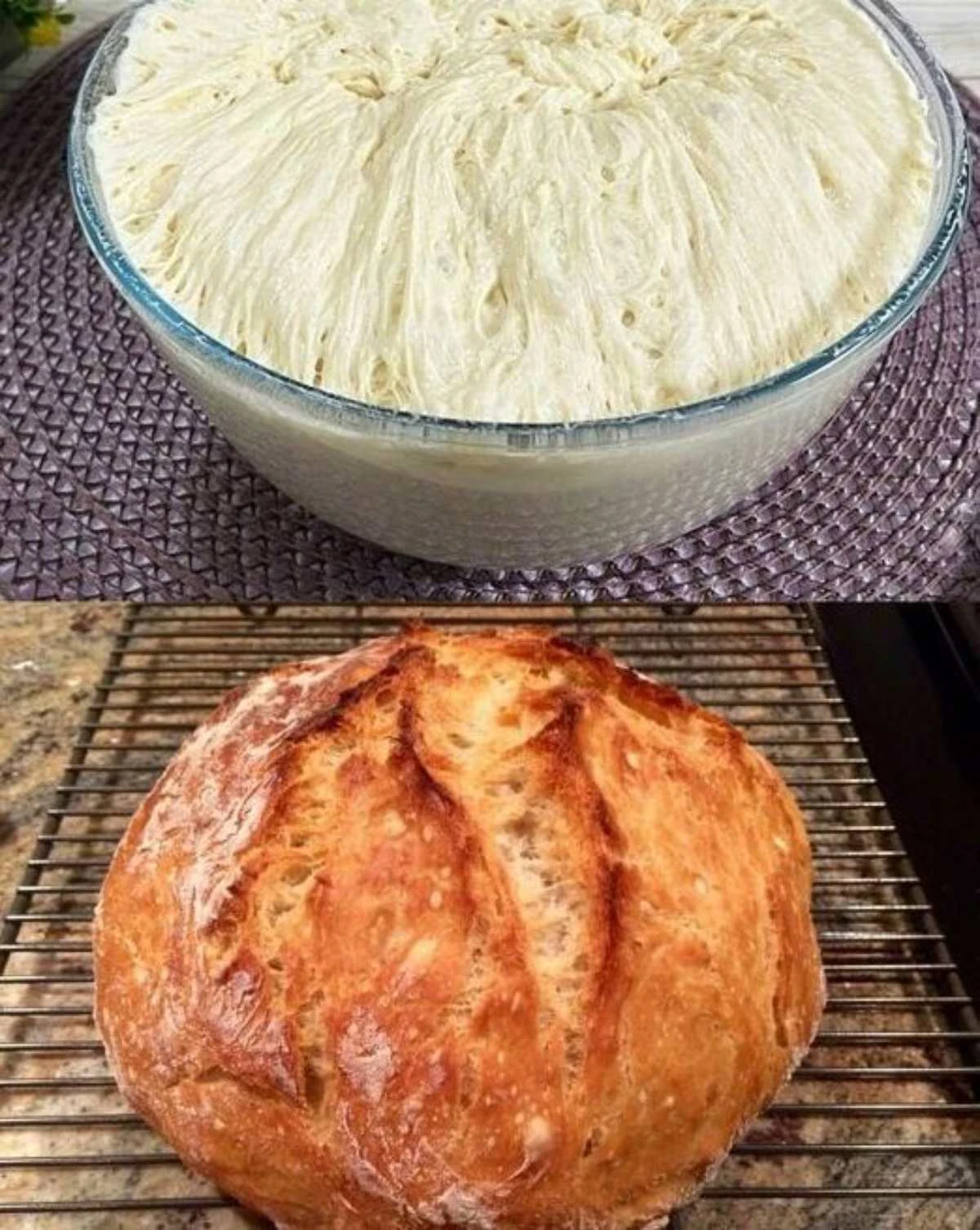
  • Long overnight rise Cover the bowl with plastic wrap or a clean towel and let the dough rise at room temperature for about 12 hours. It's ideal to mix the dough in the evening and continue in the morning. Properly risen dough is soft, full of bubbles and noticeably puffed up – this is proof that fermentation went as it should.
  • Shaping the loaf without unnecessary squeezing Lightly dust the work surface with flour. Gently turn the risen dough out of the bowl – try to handle it as little as possible so you don't destroy the air bubbles. Fold the dough over itself several times (like an envelope) and shape a loose loaf. If the dough is very sticky, use a little flour on the surface, but don't add too much into the dough.
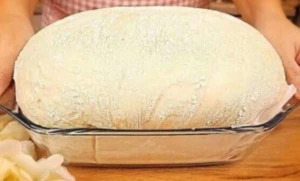
  • Second rise in the bowl or on the paper Place the loaf on baking paper and let it rest for another 30–45 minutes to rise slightly again. Meanwhile, put an empty cast-iron or heavy-sided pot with its lid into the oven and preheat the oven to 220 °C. Preheating the pot is important – this creates enough steam inside during baking and gives the bread a pronounced crust.
  • Baking in a covered pot Once the oven and pot are hot, carefully remove the pot (be careful, it's very hot), transfer the loaf into it along with the baking paper, and optionally score the dough lightly with a sharp knife. Cover the pot with the lid and return it to the oven. Bake covered for 30 minutes so steam can form and the bread can rise well.
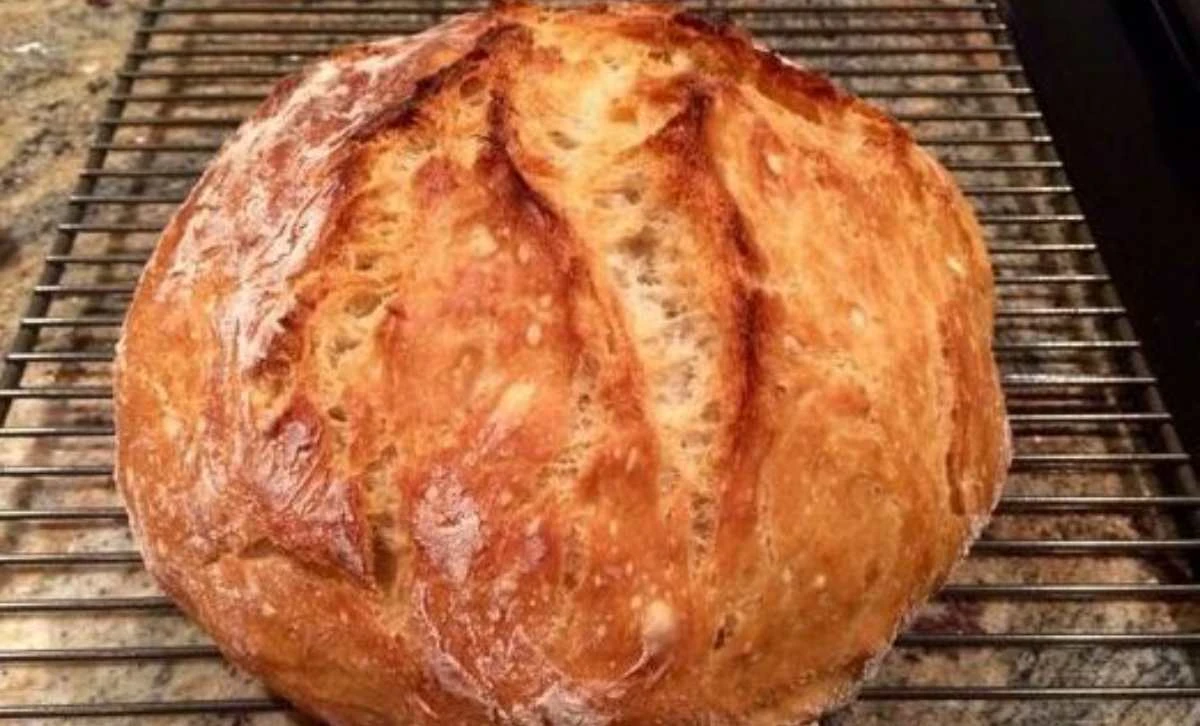
  • Finishing until crisp After 30 minutes remove the lid and bake for another 15 minutes uncovered, until the crust is nicely golden and crispy. A finished loaf sounds hollow when you tap the bottom – that's a sign it's baked through.
  • Cooling the bread Remove the baked bread from the pot and let it cool completely on a rack. Even if you're tempted, don't slice it right away – the bread continues to "finish" inside and slicing too early may cause it to collapse or become unnecessarily soggy.

Quick recipe info

Servings: approx. 1 large loaf (8–10 slices)

Prep time (active work): 15 minutes

Rising time: approx. 12–13 hours

Bake time: 45 minutes

Tips and variations

  • You can replace part of the plain flour (100–150 g) with finely milled wholegrain flour for a more rustic flavor and higher fiber content.

  • You can add a tablespoon of olive oil to the dough to soften the crumb.

  • Adding herbs (rosemary, thyme, oregano) or crushed caraway directly to the dough works great.

  • You can mix seeds into the dough or sprinkle them on top of the loaf just before baking.

  • If you don’t have a cast-iron pot, use another pot with a metal lid or a heavy-sided roasting pan that can go in the oven.